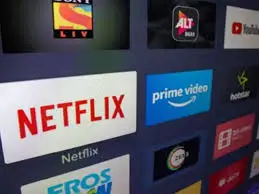
The “streaming wars” refers to the intense competition between platforms like Netflix, Disney+, Amazon Prime, HBO Max, and others to grab subscribers. This blog is about how and why they fight using exclusive content, original shows, pricing strategies, and global expansion. Let’s dive further into this,
Table of Contents
THE BEGINNING – NETFLIX’S RISE
Before streaming, In the early 2000s, entertainment was dominated by DVD rentals (Blockbuster), cable TV, and cinema, people had to pay per DVD rental or stick to fixed TV schedules. This model had high inconvenience + limited choices – you couldn’t watch what you wanted, when you wanted.
Netflix’s early model, in 1997, Netflix was started as a DVD-by-mail rental service in the US. Netflix introduced a subscription model instead of late fees like blockbuster. It had fixed monthly fee for unlimited rentals. According to Economics logic, subscription creates predictable revenue for the company, spreads risk across customers, and builds loyalty.
Then, around 2007, Netflix introduced video streaming as internet speeds improved. This was a revolution because, there were no physical DVDs causing lower distribution costs, Instant access resulted in higher customer satisfaction and Global scalability – same content could reach millions instantly. In accordance with Economics of scale, once a movie/show was uploaded, the cost of streaming it to 1 more person was almost zero and this gave Netflix an edge over Blockbuster and cable TV, which relied on physical infrastructure.
But, the rise of Netflix resulted in the fall of Blockbuster,
Netflix was growing with a customer-first model – no late fees, personalization and convenience. Meanwhile Blockbuster ignored streaming and stuck to DVD rentals + late fees and by 2010, Blockbuster filed for bankruptcy, and Netflix had become the new king of entertainment.
NEW PLAYERS
Once Netflix proved streaming was the future, it opened the floodgates. Entertainment giants, tech companies, and even regional startups wanted a piece of the market. Each new entrant came with its own economic logic, strengths, and strategy.
Amazon Prime Video (2011)
Unlike Netflix, Amazon used a bundle strategy – Prime Video wasn’t just about video, it came with free delivery, music, e-books. This made it more valuable and harder to cancel.
Strengths, Amazon has deep pockets, it could afford billion-dollar shows like “Lord of the Rings: The Rings of Power”. Global reach, since amazon even before prime had a global audience it was easy for prime to grab attention.
Amazon was proved to be in advantage leveraging its AWS cloud servers – the world’s biggest cloud platform to deliver content faster and cheaper.
Hulu (2008)
Hulu, limited to US only, used an ad-supported + subscription model, making it cheaper than Netflix.
Strengths: Focused on next-day streaming of TV shows so that people who missed live broadcasts could catch up easily.
Hulu was one of the earliest player in hybrid monetization – ads + subscriptions.
Disney+ (2019)
Disney+ already owned massive franchises like Marvel, Star Wars, Pixar, National Geographic. With Disney+, they used exclusive content lock-in – If you want Marvel/Star Wars, you must get Disney+.
Strengths: Disney has a huge library of family content. It was launched at a cheaper rate than Netflix. Disney focused on bundling – Disney + Hulu + ESPN for wider appeal.
Disney leveraged its brand trust and nostalgia, combined with personalized recommendation algorithms like Netflix.
Apple TV+ (2019)
Apple entered as a loss leader strategy, pricing very low or free with Apple devices to push people into its ecosystem.
Strengths, Apple focused on quality over quantity, entering with fewer shows, but big hits like Ted Lasso and The Morning Show. Since Apple already had loyal device customers who could be converted easily.
Apple used its strategy of seamless integration with iPhones, iPads, Apple TVs, etc. to grab attention and audience.
HBO Max (2020, now Max)
HBO Max, positioned as a premium service with blockbuster titles like Game of Thrones, DC Universe, Warner Bros films.
Strengths: Max had exclusive access to new Warner Bros movies as well as prestige TV shows (critically acclaimed dramas and originals).
It used WarnerMedia’s global distribution system to scale.
Regional Players (India, Asia, etc.)
Hotstar (India), Later merged with Disney+ (now Jio Hotstar, Jio – in the race of owning the successful side of world lol). It was mainly known for sports streaming (cricket IPL rights brought millions of users).
Voot, Zee5, SonyLIV, Competing in Indian markets with local TV + OTT mix.
Tencent Video, iQIYI (China), Dominating in local markets.
Economics behind regional players, Regional players win by offering cheap subscriptions, local languages, and sports rights.
Science behind regional players, AI-based subtitle/dubbing + low-bandwidth streaming tech to serve users with weaker internet connections.
Economic Patterns of New Players
Oligopoly structure: Few large firms dominate globally like Netflix, Amazon, Disney, Apple.
Monopolistic competition locally: Regional OTTs survive by offering niche or local content.
Network effects: More subscribers = more money = more exclusive content, attracting more subscribers ‘self-reinforcing loop’.
Hence, the new players didn’t just copy Netflix. Each had its own weapons:
Amazon – Bundling + deep pockets.
Hulu – TV catch-ups + ad model.
Disney – Content monopoly.
Apple – Device ecosystem.
HBO – Prestige + blockbusters.
Regional apps – Local content + sports.
Together, they turned streaming into a full-scale war for attention, loyalty, and wallets.
Pricing Wars in Streaming
Platforms compete not just with content, but also with how cheap or valuable they look to attract subscribers. Following mentioned are some of the strategies that are used by these platforms to compete with each other.
Price discrimination: Platforms offer different plans at different prices (basic, standard, premium). The idea behind is that not everyone values streaming the same way, a student might just want a cheap mobile-only plan, while a family may want 4K on multiple screens. So by creating tiers, platforms capture more revenue from each type of consumer.
In terms of Economics: “Extracting consumer surplus.” Instead of one fixed price, they take as much as each group is willing to pay.
Bundling: Instead of selling streaming alone, some platforms add extras – music, sports, delivery, or even games. The psychology behind is that people feel they are getting more value for the same money.
In the terms Economics: Bundling increases “switching costs” if you cancel streaming, you also lose music/sports/delivery. That makes users “locked in.”
Penetration pricing: New players often enter with very low prices to quickly grab market share. Once they gain millions of subscribers, they gradually raise prices.
In terms of Economics: This strategy sacrifices ‘short-term profit for long-term dominance’. It’s like baiting customers with cheap entry, then monetizing them later.
*Consumer side: With too many streaming options, people can’t afford them all. This leads to subscription fatigue, users cancel or switch between services. To fight this, platforms test creative pricing like bundles, cheaper ad plans, and localized offers.
In terms of Economics: The market is moving from a growth phase (cheap to attract users) into a retention phase (keeping users without losing money).
In short, the pricing war is a balancing act – keep prices low enough to attract subscribers, but high enough to cover billion-dollar content costs.
THE ECONOMICS OF STREAMING
Streaming looks simple like pay monthly and watch unlimited shows. But behind the screen, the business model is complex, expensive, and risky.
- High Fixed Costs, Low Marginal Costs
Fixed costs are like the cost of producing a new series or movie which can cost millions (or even billions), for Example: The Rings of Power reportedly cost over $1B for Amazon. But once the show is made, streaming it to 1 more person (Marginal Cost) costs almost zero (just server/bandwidth fees).
Economics behind: This creates ‘economies of scale’ i.e. the more subscribers you have, the more you can spread those fixed costs and that is why global reach matters.
- Subscription Revenue Model
Most platforms use a ‘recurring subscription’ system (monthly/annual). The advantage here is – Predictable revenue, unlike cinema tickets that depend on each release. But the challenge comes when the growth slows once most people already subscribe so then retention becomes key.
- Content as the Biggest Weapon
In terms of economics, content is a differentiator. If you have the rights to Marvel or Stranger Things, fans must subscribe. But content is insanely expensive – Netflix alone spends $15–20 billion annually. This creates a ‘winner-takes-most’ effect – platforms with the best content attract more users, earn more, then buy even more content.
- The Profitability Problem
Despite huge subscriber numbers, many platforms lose money because of high content costs. Why? Because pricing is kept low to fight competition, while production costs keep rising.
In terms of Economics: this strategy is called “burn cash now, dominate later”, platforms hope scale will bring future profits.
- Ad Revenue as a Safety Net
To fix losses, platforms add ads on cheaper tiers, basically Ads = extra revenue stream without raising prices too much and this shifts streaming from a pure subscription model to hybrid model.
So basically, The economics of streaming = huge upfront content costs + low extra cost per viewer + subscription revenue + intense competition + ad money as backup. Profitability depends on scale, exclusives, and global reach.
MY POV
In my view, streaming is most profitable when it spreads worldwide, not just in one country because bigger audience = better cost recovery on shows. A $100M movie is risky for only one market, but safe if 200M subscribers can watch it. And That’s why platforms aggressively localize like K-dramas, Indian originals, Spanish shows like Money Heist. But gradually, users may expect a merger or bundle like Netflix + games, Disney+ with Hulu or Amazon with Prime perks because users can’t pay for too many platforms.
Profit pressures might take place as Investors now demand profits, not just growth. Platforms will cut costs, focus on fewer but bigger shows, and might have to adopt Hybrid models (i.e. ads + subscription) will dominate more like YouTube + TV combined.
📌Author’s Note:
This blog is not just research — it’s a step in my journey toward working with global institutions like the IMF and World Bank.
Stay tuned and grow with me!