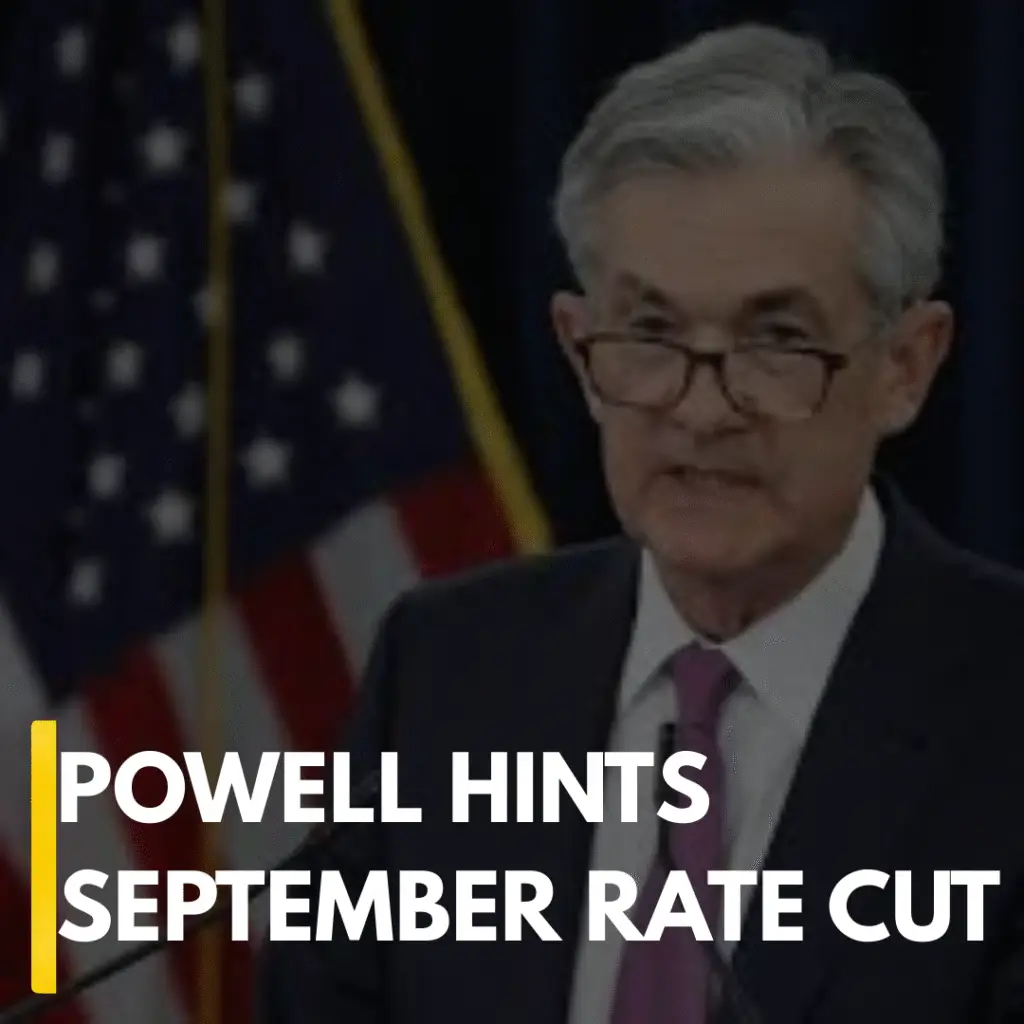
The U.S. Federal Reserve is once again in the spotlight after Chair Jerome Powell’s Jackson Hole speech, where he hinted at the possibility of an upcoming interest rate cut. With inflation pressures still present but the labor market showing signs of strain, the Fed faces a tough balancing act. Markets quickly reacted to Powell’s remarks, pushing expectations of a September rate cut to record highs and sending Wall Street indices soaring. This move could mark a major turning point for the American—and global—economy, influencing everything from stock prices to borrowing costs.
“The stability of the unemployment rate and other labor market measures allows us to proceed carefully as we consider changes to our policy stance,” Powell told international economists and policymakers at the Fed’s annual conference in Wyoming.
Before exploring why the U.S. might need to cut rates, let’s first understand how the Federal Reserve works.
Table of Contents
HOW FED WORKS?
The Federal Reserve System is the central bank of the United States, responsible for national monetary policy to promote a stable economy, supervising and regulating financial institutions, and ensuring the safety of payment systems. It operates through the Board of Governors, 12 regional Federal Reserve Banks, and the Federal Open Market Committee (FOMC).
The Federal Reserve Bank operates America’s monetary policy so, if FED lowers interest rates – borrowings and the flow of money increases in the economy and vice versa.
IS IT TIME FOR THE FED TO CUT RATES?
It may seem surprising that the Fed is considering a rate cut without a recession, but here are the key factors behind it.
Slowing Job Market
Powell highlighted that the U.S. labor market is losing momentum and the fact that both hiring and worker demand are cooling, raises the risk of rising unemployment if borrowing continues to stay expensive.
High Borrowing Costs
U.S. current interest rates remain at restrictive levels due to which businesses and households are struggling with loan repayments, mortgages, and investment costs, which can slow economic growth further.
Risk of Economic Slowdown
If rates stay high for too long, the U.S. could tip into a sharp downturn. According to Powell a rate cut now would act as a cushion, encouraging spending and investment.
Inflation Pressures Easing
Although tariffs have temporarily pushed prices up, inflation is not surging uncontrollably. This gives the Fed some space to ease policy without immediately risking runaway inflation.
Global & Political Pressure
The global economy is showing signs of weakness, and many countries are cutting rates. Domestically, the Trump administration is pressuring the Fed to support growth, though Powell reaffirmed the Fed’s independence and stressed decisions will remain data-driven.
In short, the Fed is stuck between high inflation risks and a slowing job market. Cutting rates now could provide relief to workers and businesses, while preventing a deeper slowdown.
THE CAUTION
Even though Powell has announced the possible rate cut he has assured the probability too and Powell’s caution is the key part of this whole debate. Here’s why he isn’t fully sure about cutting rates yet:
Inflation is Still a Risk
Even though inflation has come down from its peak, tariffs and supply-side pressures are keeping prices somewhat elevated. If the Fed cuts rates too quickly, it could fuel demand again, causing prices to rise faster.
Mixed Economic Signals
The job market is slowing, but it hasn’t collapsed. Some sectors still look strong, while others are weakening, this makes it tricky to decide whether the economy truly needs a big stimulus.
Fear of Repeating Mistakes
In the past, cutting rates too early has sometimes led to “stop-and-go” cycles where inflation flared back up. Powell wants to avoid making a hasty move that he might have to reverse later.
Data-Driven Approach
Powell has stressed the Fed will remain data-dependent. That means he wants more clear evidence either that inflation is firmly under control or that the job market is deteriorating faster, before making a firm decision.
Political Pressure vs. Independence
The Trump administration is openly pushing for aggressive cuts but Powell doesn’t want the Fed to look like it’s caving to political demands, so he is being extra cautious in his language.
In short: Powell is balancing two risks—cut too soon and inflation might surge again, wait too long and the economy might slow sharply. That’s why he’s keeping the door open but not promising anything yet.
CONCLUSION
The Federal Reserve stands at a critical crossroads. While the U.S. economy is not in a recession, signs of a cooling job market and high borrowing costs are creating pressure for a rate cut. At the same time, lingering inflation risks mean the Fed must tread carefully. Powell’s cautious stance reflects the challenge of balancing growth with stability. Whether or not the Fed moves in September, its decision will have lasting effects on businesses, households, and global markets.
Whatever the Fed’s next steps may be, subscribe to TheEconDecode and stay updated on what happens next.
📌Author’s Note:
This blog is not just research — it’s a step in my journey toward working with global institutions like the IMF and World Bank.
Stay tuned and grow with me!