
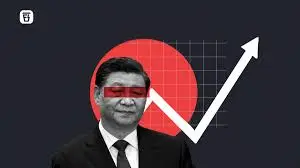
China’s stock markets are on a strong rally, surprising many given the backdrop of slowing growth, weak consumer demand, and a struggling property sector. The surge is fueled by hopes of government stimulus, regulatory easing, and renewed investor confidence. While the rally signals optimism, it also highlights the contrast between rising markets and the broader economic challenges China still faces. Let’s take a broader look at what’s driving this rally and why it’s happening now.
Table of Contents
WHY THE STOCK MARKET IS RALLYING?
This isn’t the first time China’s markets have seen dramatic swings. A decade ago, a painful stock market crash forced Beijing to step in with state-backed funds, leaving a lasting scar on investors. That memory still shapes today’s sentiment—caution about bubbles, but also confidence that the government will step in if things go wrong. Following mentioned are the possible causes of this Stock Rally,
Government Support – After the 2015 crash, Beijing has introduced policy measures like easing regulations, cutting interest rates, and supporting housing/tech sectors to boost confidence and trust, engaging investors.
Stimulus Hopes – Due to government support and the psychological impact of past experiences, investors expect more economic stimulus packages, which drives buying.
Foreign Investment – Inflows from global funds are pushing stocks higher and improving investor sentiment, making investing reliable for them.
Low Valuations – After months of poor performance, Chinese stocks are now relatively cheap, making them attractive.
Short-term Optimism – Investing in stocks gives short-term optimism to investors which makes them bet on quick gains even though the real economy is still weak.
Along with government support and stimulus hopes, AI and tech-related stocks have become a hot theme. Investors are pouring money into companies linked to artificial intelligence, semiconductors, and digital infrastructure, expecting China to push these sectors as part of its long-term growth strategy. This “AI boom” has added momentum to the rally, much like how AI stocks have lifted markets in the U.S.
So, AI optimism + policy support + cheap valuations together are fueling this surge.
RALLY v/s REALITY
While markets are soaring, China’s real economy tells a very different story. China’s economy is being strained by US tariffs and a property crisis, yet stocks are extending their bull run, stirring doubts on the rally’s staying power. The actual condition of China’s economy is mentioned below,
Slowing Growth – China’s Stock Market is in a surge but its GDP growth has been weaker than expected, far below its pre-pandemic highs, which signals towards a hollow growth.
Property Crisis – China’s traditional growth engine was used to be the real estate sector but is now struggling with debt, defaults, and weak demand.
Weak Consumer Demand – Households are cautious, saving more and spending less due to job insecurity and lower confidence in real economic growth and over confident sentiments towards inflation coming up.
High Youth Unemployment – With the stock market surge v/s economic slowdown, job opportunities for young people remain limited, adding pressure to consumption.
Deflationary Pressures – The sudden stock surge has created expectations that inflation might return once markets cool down. However, weak domestic demand continues to weigh on the economy, making conditions worse.
Exports Under Pressure – Global demand is soft, and trade tensions especially with the U.S. add challenges.
So, China’s economy is fragile — struggling with property woes, weak demand, and slow growth — while the stock rally is more about policy support, AI optimism, and investor sentiment than about real economic strength.
DISCONNECT BETWEEN MARKET & ECONOMY
The rally has been driven by cash-rich investors shifting into stocks amid a lack of alternatives, with some analysts warning that a bubble is in the making, citing “irrational exuberance”.
“Markets might be expecting, either correctly or incorrectly, that macroeconomic fundamentals will improve,” said Homin Lee, senior macro strategist at Lombard Odier Ltd. in Singapore. “But a bull market will not be sustainable if inflation remains close to 0% and corporate pricing power faces severe headwinds from weak domestic demand”.
China’s stock market has been helped by investors shifting their investments from fixed income, as they scale back expectations of monetary easing and respond to Beijing’s decision to restart taxes on interest payments made on government bonds or those of financial institutions.
While stocks are surging, the economic conditions of China are a reciprocate of its strong stock market, proving a threat of inflation in near future.
IMPACT ON CONSUMPTION AND INVESTMENT
Impact on Consumption – Even with stocks rising, ordinary consumers are not spending more. Weak job growth, low confidence, and falling property wealth make households cautious. Instead of boosting demand, many people are saving more, fearing future instability and inflation.
Impact on Investment – Businesses are also holding back. The rally lifts financial markets, but real investment in factories, housing, or new projects remains weak because companies don’t see strong demand ahead.
The stock surge hasn’t translated into stronger consumption or investment. People and businesses still see risks, so the rally feels more like a financial-market story than an economic recovery.
CONCLUSION
China’s stock market rally is a clear sign that investor sentiment can rebound quickly—driven by AI optimism, policy support, and optimistic retail and institutional flows. Yet, the real economy remains fragile: growth is slowing, consumers are cautious, and real investment—especially in property—lags behind. The rally, while encouraging, must be viewed through the lens of deep-rooted structural challenges.
Looking ahead, the sustainability of this recovery hinges on whether Beijing can translate financial-market buoyancy into real, broad-based economic stabilization: by reinvigorating consumption, revitalizing private and housing investment, and managing deflationary pressures.
Latest Updates
- Chinese equities have surged to decade-high valuations, gaining roughly $1.3 trillion in market value this month alone, supported by domestic investor enthusiasm and state-backed institutional flows.
- Despite sluggish macro indicators, Wall Street heavyweights JPMorgan and Goldman Sachs remain bullish, projecting double-digit upside for Chinese indices through year-end, citing liquidity-driven momentum and supportive policy environment.
- Analysts—including Nomura—highlight that the rally’s impact on the wider economy is likely limited, given equities account for a small share of household wealth.
- Major companies like Alibaba are fueling the AI narrative, with the tech giant rolling out its own AI chip and investing heavily in cloud and AI infrastructure, bolstering both investor confidence and strategic direction.
- Despite market euphoria, macro data remains mixed: China posted 5.3% GDP growth in H1 2025, lifted by industrial and export strength—but retail demand, private investment, and real estate remain weak. Growth is forecast to decelerate to around 4.6% or lower in the coming quarters.
MY POV
In my view, a stock market surge is often seen as a positive indicator of an expanding, industrial-driven economy. However, when the real economic situation stands in sharp contrast to the market’s performance, it becomes crucial for the government to step in. Investor behavior also plays a role—people are naturally drawn to short-term optimism and quick gains, but once they achieve their desired returns, they tend to pull back and save, anticipating potential inflation or future instability.
Hence, the stock rally shows that confidence can be revived quickly with policy support and market optimism, but the slowing economy signals deeper structural problems. If consumption stays weak and investment remains cautious, China’s growth could struggle in the long term. The future will depend on whether Beijing’s reforms and stimulus can turn short-term market excitement into lasting economic stability.
📌Author’s Note:
This blog is not just research — it’s a step in my journey toward working with global institutions like the IMF and World Bank.
Stay tuned and grow with me!