
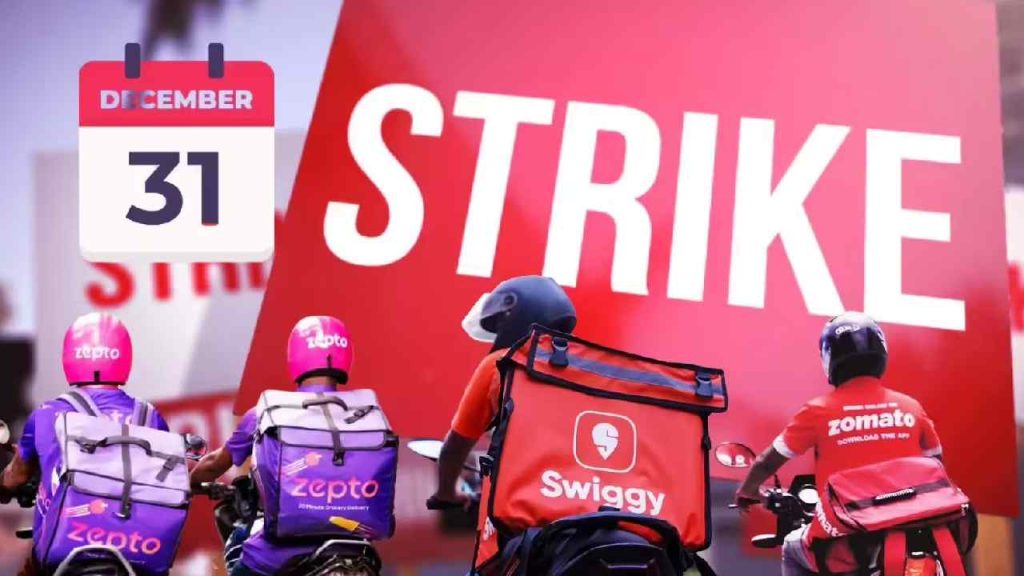
India’s gig workers, especially delivery partners for Blinkit, Zepto, Swiggy, Zomato, Amazon and others have launched a nationwide strike across major cities on New Year’s Eve (31 Dec 2025). The movement has captured public attention due to the timing i.e. peak delivery season and the scale of participation, with over 1.5–1.7 lakh workers joining the protest.
This strike builds on an earlier action on December 25, marking a growing labor rights movement in India’s gig economy.
Table of Contents
When & Where Did the Strike Happen?
Started: The first major action took place on Dec 25, 2025, when thousands of delivery partners logged off apps across cities like Hyderabad, Delhi, Gurugram and others.
Main Strike: A **nationwide coordinated strike on Dec 31, 2025 (New Year’s Eve), organized by unions such as the Gig & Platform Service Workers Union (GIPSWU) and the Telangana Gig and Platform Workers Union (TGPWU).
Locations: Across India (pan-India participation), not limited to a single city.
Why Are Gig Workers Striking?
The workers and unions have put forward several key demands —
End to 10-Minute / Ultra-Fast Delivery Model
Delivery workers are demanding that 10-minute and similar ultra-fast delivery promises be scrapped because:
- They create high pressure and unsafe conditions, increasing traffic accident risk.
- Workers often have to rush deliveries to meet algorithm-driven targets.
Minimum Pay System
Workers want guaranteed earnings that aren’t dependent solely on variable incentives:
- A minimum pay per kilometre (e.g., ₹20/km) and a guaranteed monthly income (e.g., ₹24,000–₹40,000) — to protect against unpredictable earnings.
Social Security
Gig workers largely have no employee status, so they lack social safety nets. Their demands include:
- Health insurance, accident cover, pensions
- Maternity and emergency leave
- Formal recognition under labour rights frameworks.
Safety & Dignity
This includes:
- Mandatory safety gear and training
- Reasonable working hours and rest breaks
- Removal of forced peak-hour systems and rigid delivery slot pressures.
Job Security
Workers want basic protections against arbitrary punitive actions:
- Fair processes before account deactivation
- End to rating-based punishments
- Human grievance redressal instead of AI or automated penalties.
Transparency & Algorithm Accountability
Workers also want transparency on how delivery apps decide:
- Work allocation
- Pay
- Penalties
This is critical given the opaque nature of app algorithms.
Conclusion
The gig workers’ strike at the end of 2025 is a landmark moment in India’s labour movement within the platform economy. It brings to the forefront the unresolved tensions between corporate business models built on flexibility and worker demands for fairness and security.