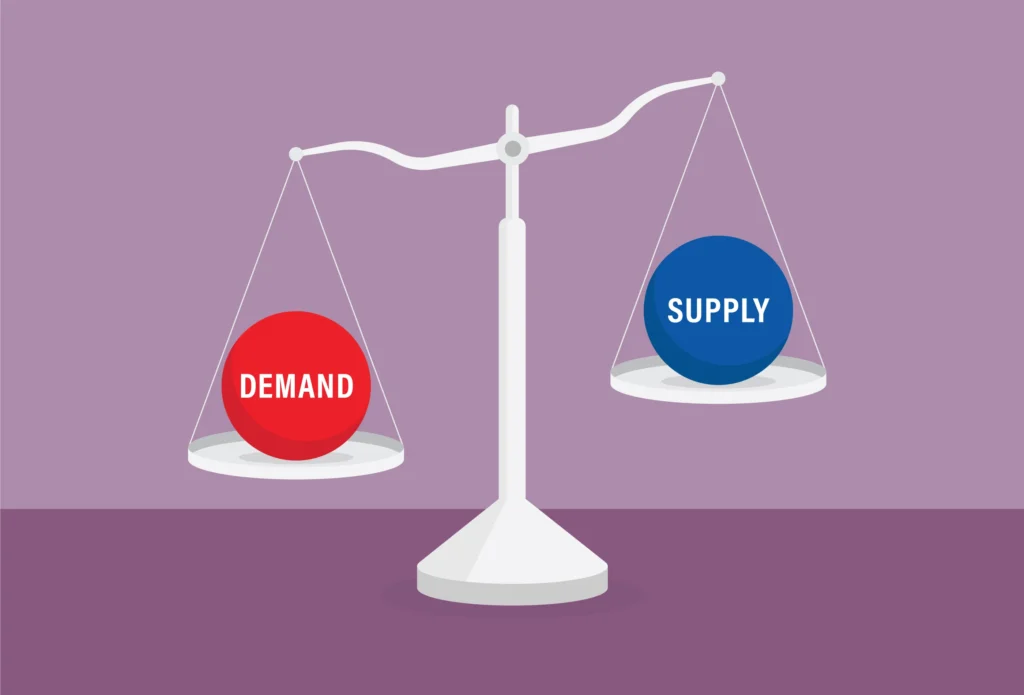
As we know that while the wants are considered unlimited the resources to satisfy those wants are limited in an economy and to satisfy those unlimited wants with limited resources, we use the concept of Demand and Supply which is a basic concept of how buyers and sellers exchange the goods and services in a market and how prices are determined in an economy according to the quantity demanded and supplied. Let us closely look at the concept of Demand and Supply and understand how both works!
Table of Contents
What is DEMAND?
Demand refers to the willingness and ability of a consumer to buy a product at different level of prices during a given period of time.
Key concepts of demand:
Law of Demand
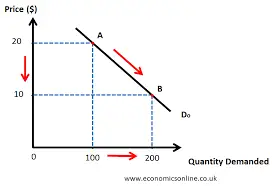
The law of demand states that when the price of good or service increases, quantity demanded decreases, and vice versa (keeping all other factors constant).
This shows an inverse/negative relationship between price and demand.
Demand vs Quantity Demanded
While demand refers to the entire relationship between price and how much consumers are willing to buy at different prices, Quantity demanded refers to the exact amount consumers are willing to buy at a specific price.
For example: when we talk about Demand – If income rises, people may buy more of a product at all price levels – demand increases and if we talk about Quantity demanded – If the price of ice cream falls from ₹100 to ₹80, people buy more – quantity demanded increases, which shows that demand changes with non-price factors while Quantity Demanded changes only when price of the product changes.
Determinants of demand
Other than the own price of the good demand is also affected by some other factors as well which are listed below:
- PRICE OF THE GOOD
If the price of the good or service increases its demand is likely to decrease, and vice versa.
It does include some exceptions like the necessity goods – the demand of which cannot be decreased when the prices rise.
- PRICE OF RELATED GOODS
If the price of the substitute goods changes the demand of the good is likely to change for example if the price of coke decreases consumers will prefer coke over Pepsi, which will lead to the decrease in the demand of Pepsi.
- CONSUMER INCOME
If the income of the consumer increases or decreases its quantity demanded also increases or decreases due to the change in its income, for example – if the income of a consumer increases its purchasing power increases so the quantity demanded of a good or service is likely to increase.
- CONSUMER’S TASTE AND PREFERENCE
Changes in consumer tastes and preferences can lead to changes in demand, regardless of price or income. For example, if I choose to prefer colgate over Sensodyne, the demand of Colgate will increase regardless of the changes in price.
- CONSUMER EXPECTATIONS
If consumers expect prices to rise in the future, they may increase their current demand, and vice versa.
In addition to these five main determinants, other factors like the number of consumers in the market, advertising, and government policies can also influence demand.
DEMAND CURVE
Demand curve: it slopes downwards from left to right.
What is SUPPLY?
Supply refers to the willingness and ability of producers to offer goods for sale at different prices during a given period.
Key concepts of Supply:
Law of Supply
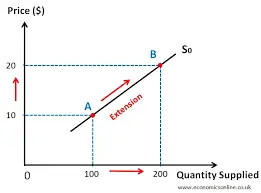
Other things being equal, an increase in the price of a good leads to an increase in the quantity supplied, and a decrease in the price leads to a decrease in quantity supplied.
This shows positive relationship between the price and supply of a good or service.
Types of Supply
- Individual Supply: Supply from a single producer.
- Market Supply: Total supply from all producers in the market.
Determinants of Supply
Following are the factors affecting supply:
- Price of the Good:
The law of supply states that as the price of a good increases, the quantity supplied also increases, assuming other factors remain constant. This is because higher prices incentivize producers to offer more of the good.
- Cost of Production:
Changes in the cost of production, such as raw materials, labor, or energy, can affect supply. Higher production costs can reduce supply, while lower costs can increase it.
- Price of Related Goods:
The price of related goods can affect supply. If the price of a substitute good rises, producers might switch to producing that good, leading to a decrease in the supply of the original good.
- Technology:
Technological advancements can improve efficiency and productivity, leading to lower production costs and increased supply.
- Government Policies:
Government policies such as taxes, subsidies, and regulations can impact supply. Taxes increase production costs, while subsidies lower them. Regulations can also restrict supply.
- Expectations:
Producers’ expectations about future prices, costs, or market conditions can influence their current supply decisions. If they expect prices to rise in the future, they might hold back current supply, and vice versa.
Supply curve
Supply curve: it shows an upward sloping curve from left to right.
Equilibrium Price and Quantity
The equilibrium is the point where demand equals supply. It determines the market price and the quantity exchanged.
For example: If at ₹40, 100 units of a good are demanded and supplied, ₹40 is the equilibrium price, and 100 units is the equilibrium quantity.
Equilibrium curve:
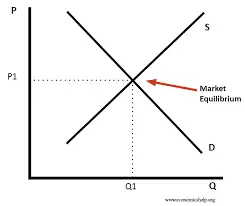
The two notable points:
- At prices above equilibrium, supply exceeds demand (surplus).
- At prices below equilibrium, demand exceeds supply (shortage).
CONCLUSION
The interaction of demand and supply is the foundation of how markets function. These forces together determine prices, influence consumer and producer decisions, and shape resource allocation in an economy. While demand captures consumer behaviour, supply reflects the producer’s response — and the balance between the two creates market stability. By understanding this framework, we gain the tools to analyze how various factors influence the economy around us — from daily purchases to national policies. Whether you’re a student, a policymaker, or a curious observer, mastering demand and supply is essential to understanding how the world of economics operates.
📌Author’s Note:
This blog is not just research — it’s a step in my journey toward working with global institutions like the IMF and World Bank.
Stay tuned and grow with me!