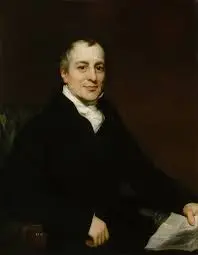
David Ricardo (1772-1823), was a classical economist known for his contributions to economics theories. The theories of comparative advantage, labour and rent are some of the key theories given by him. Ricardo and some other classical economists discovered “the law of diminishing marginal returns” theory. His most well-known work is Principles of Political Economy and Taxation (1817). David Ricardo faced several controversies on his theories but Ricardian theories remain foundational in economics till date.
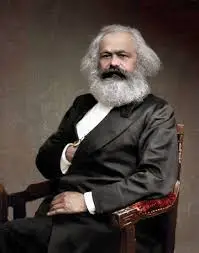
Let’s have a look at how Ricardo influenced economists like KARL MARX through his theories.
WHO WAS DAVID RICARDO?
David Ricardo was an 18th– century English economist. Ricardo began working with his father as a stockbroker at the age of 14, and afterwards got into a business of dealt with government securities. Retired at the age of 42 and bought a seat in parliament, from where he was influenced to focus about political economics and began writing in economics.
REMARKABLE FEATS
Ricardo gave some of the most practical and foundational theories in the economic history which are listed below:
COMPARATIVE ADVANTAGE THEORY
Ricardo’s most widely acclaimed theory suggests that to gain an international trade benefit countries should focus on producing goods that produce the lowest opportunity cost as compared to other nations.
By producing such goods the countries can gain an international benefits as well as help domestic industries grow in competitive international market.
Ricardo is prominently associated with the net benefits of free trade and the determinant of protectionist policies. Ricardo’s theory of comparative advantage produced offshoots and critiques that are discussed to this day.
THE LABOR THEORY
The labor theory suggests that the price of a good should be determined by the labor it took to produce it rather than the compensation paid to the labor. The labour theory of value later became one of the foundations of Marxism.
Ricardo later modified this theory by considering capital costs and wages.
THE THEORY OF RENT
Ricardo was the first economist to discuss the idea of rents, or benefits that occurs to the owners of assets solely due to their ownership rather than their contributions to any actual productive activity.
He introduced the concept of differential rent, stating that landowners benefit from land scarcity. As population and demand increases, less fertile land is used, raising the rent on more fertile land.
This idea was later applied to political economics too.
IRON LAW OF WAGES
The iron law of wages states is an economic theory that suggests that wages naturally tend to settle at a subsistence level—just enough to allow workers to survive and reproduce. If wages rise above this level, population growth will eventually drive them back down. The theory is mainly associated with David Ricardo and THOMAS MALTHUS, although the term “iron law” was later popularized by Ferdinand Lassalle, a 19th-century
WAGE SPIRAL
High wages – high population, More workers – lower wages, Lower wages – low population
RICARDIAN EQUIVALENCE
This theory was given by Ricardo and later formalized by ROBERT BARRO. It states that government borrowings (deficit spending) do not affect overall demand in the economy because the citizens anticipate the future taxes and starts saving more.
Which suggests that Government stimulus through deficit spending is ineffective in boosting economic growth and tax cuts doesn’t lead to more consumer spending, only the change in real productivity can affect demand.
ADVOCACY
Ricardo advocated for free trade and minimal government intervention in the economy and supported the quantity theory of supply, stating that increasing money supply leads to inflation.
CONTROVERSIES & CRITICISM
David Ricardo was a highly influential economist, but his theories sparked several controversies and debates, both during his time and later. Here are some key controversies associated with him:
- The Iron Law of Wages
🔹 Controversy: Ricardo believed that wages naturally tend to a subsistence level (just enough for survival). If wages rise, population growth will eventually push them back down.
🔹 Criticism: Critics argued that this theory ignored technological advancements, productivity growth, and improvements in living standards. Later economists like John Stuart Mill and Karl Marx challenged this view.
- The Labor Theory of Value
🔹 Controversy: Ricardo argued that the value of a good is determined mainly by the labor required to produce it.
🔹 Criticism:
- Some economists (including later marginalists) pointed out that demand, scarcity, and utility also influence prices, not just labor.
- Karl Marx expanded on Ricardo’s ideas but criticized him for not fully addressing exploitation in capitalism.
- Theory of Rent & Landowners’ Interests
🔹 Controversy: Ricardo’s differential rent theory argued that landlords benefit from rising land scarcity, but they don’t contribute to production.
🔹 Criticism:
- Landowners opposed his ideas, as he advocated for policies that would reduce their economic power.
- Some argued that landowners do invest in improvements, which Ricardo overlooked.
- Free Trade & Corn Laws Debate
🔹 Controversy: Ricardo was a strong supporter of free trade and opposed Britain’s Corn Laws (which imposed tariffs on imported grain).
🔹 Criticism:
- Landowners and farmers opposed his ideas because removing tariffs would lower grain prices and reduce their profits.
- Industrialists and workers supported him since free trade meant cheaper food and lower costs.
🔹 Outcome: The Corn Laws were eventually repealed in 1846, but the debate between protectionism and free trade continues today.
- Ricardian Equivalence & Government Policy
🔹 Controversy: His idea (later developed by Robert Barro) suggests that government borrowing does not affect economic demand because people expect future taxes and save instead of spending.
🔹 Criticism:
- Many economists argue that people don’t always think rationally or save for future taxes.
- In reality, government spending can boost the economy in the short run, contradicting Ricardian Equivalence.
Conclusion
Despite the controversies, Ricardo’s work remains foundational in economics. His theories sparked debates that shaped later economic thought, influencing both capitalist and socialist economists.
CONCLUSION
David Ricardo remains one of the most influential economists in history, shaping the foundation of classical economics with his theories on comparative advantage, labor value, rent, and wages. His advocacy for free trade and minimal government intervention laid the groundwork for modern economic policies. While some of his ideas, such as the Iron Law of Wages and the Labor Theory of Value, have been challenged or refined by later economists, his work continues to be a cornerstone of economic thought.
His influence extends beyond classical economics, impacting Marxist theory, neoclassical economics, and modern fiscal policies. Despite controversies and debates, Ricardo’s contributions remain relevant in discussions on international trade, income distribution, and economic growth.
His legacy proves that economic theories evolve, but foundational principles continue to shape policy and academic thought.
MY POV
David Ricardo was a highly influential economist who developed some of the most widely acclaimed theories, including the Comparative Advantage Theory, Labor Theory of Value, Rent Theory, Iron Law of Wages, and Ricardian Equivalence.
Although his theories later became controversial, they remain foundational in modern economics. Ricardo’s interest in political economy was shaped by his professional background—first as a dealer of government securities and later as a member of parliament—despite his strong opposition to government intervention.
I believe Ricardo’s theories were well-structured but did not fully account for all influencing factors. For instance, his Comparative Advantage Theory highlights the core principles of welfare economics, as he advocated for reducing tariffs to support domestic industries. However, many of his theories were later criticized for oversimplifying economic realities.
Economists such as Karl Marx, John Stuart Mill, and Alfred Marshall were influenced by Ricardo’s work but also criticized and refined his theories over time. His contributions remain significant, but they also serve as a foundation for ongoing economic debates and reforms.
SOURCES
THE BRITANNICA, WIKIPEDIA, THE HISTORY OF ECONOMIC THOUGHT, CLEARTAX, NOTINGHAM, INVESTOPEDIA, ECONLIB, AXIS BANK & CHATGPT.
📌Author’s Note:
This blog is not just research — it’s a step in my journey toward working with global institutions like the IMF and World Bank.
Stay tuned and grow with me!