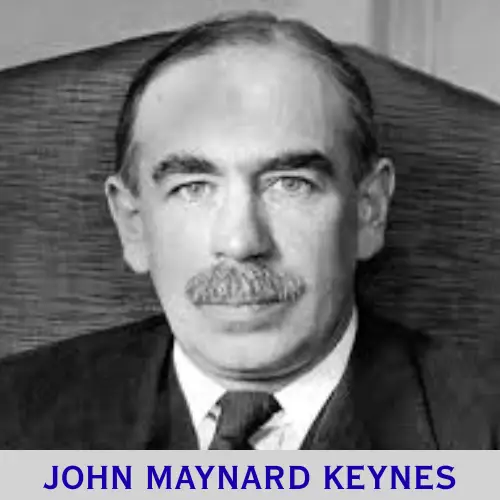
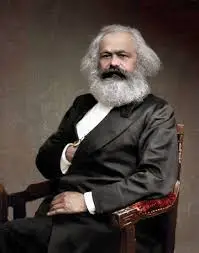
“From each according to his ability, to each according to his needs"
~ Karl Marx
Imagine a world where there’s no unemployment, societal classes and no state control on resources. KARL MARX, a 19th century economist laid the establishment of “Marxism” that believed in a socialist and communist economy rather than a capitalist economy where the owners of resources exploited the worker class.
Let’s have a look at how Marxism influenced society and resulted in several wars during the 19th century (for ex. The Russian Revolution of 1917).
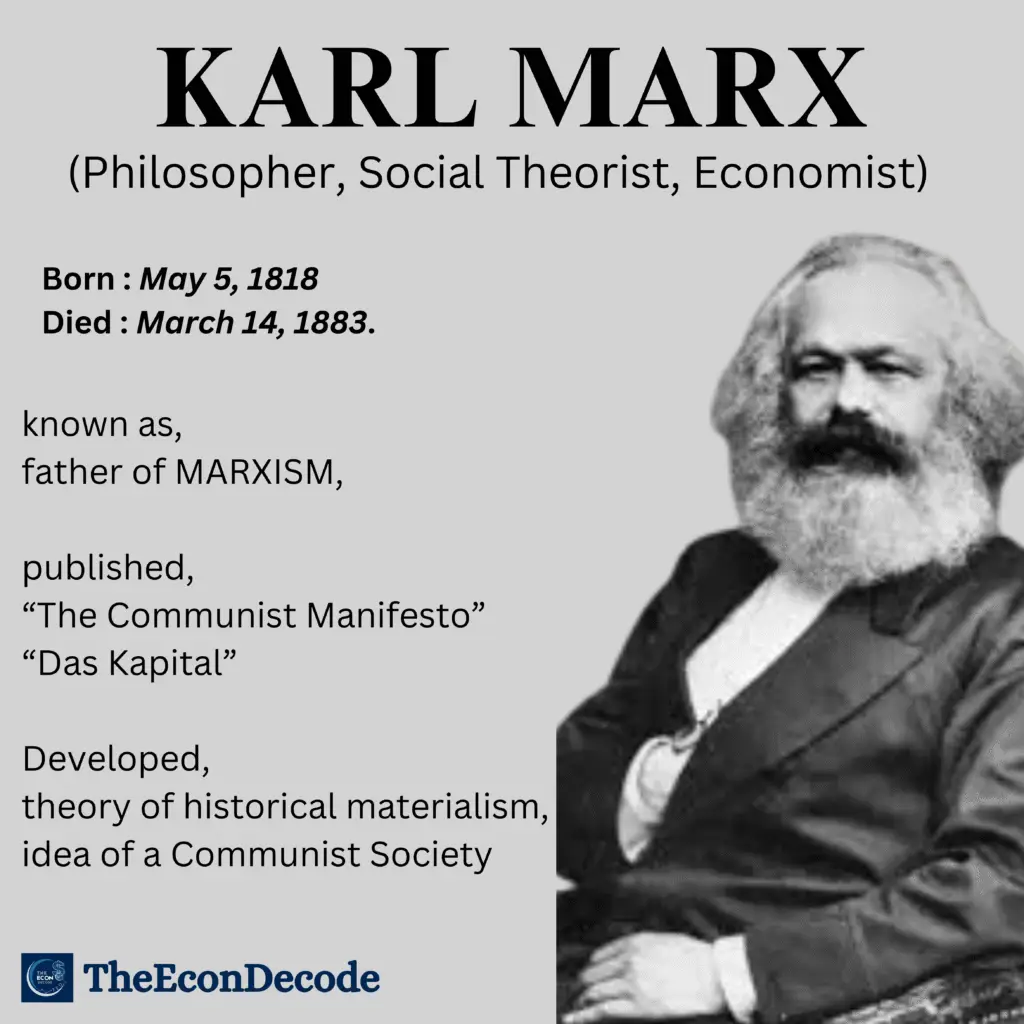
Table of Contents
WHO WAS KARL MARX?
Karl Marx (1818-1883), was a philosopher, economist, author and social theorist. Marx is known for his revolutionary writings favouring socialism and a communist revolution.
Marx studied law in Bonn and Berlin then later he became involved in radicalism at a young age which prevented him from the profession of teaching after collecting his doctorate from the University of Jena in 1841 so he took a job as a journalist and later became the editor of Rheinische Zeitung, a liberal newspaper in Cologne.
Marx, in conjunction with Friedrich Engels, published “The Communist Manifesto” in 1848. Later in his life published “The Das Kapital” which discussed the labour theory of value.
EVENTS INFLUENCING MARX’S IDEAS
- INDUSTRIAL REVOLUTION
Time – late 18th – 19th century
During this time the factories of Europe popped up, the workers were underpaid and overworked that made Marx think of the cruelties of capitalist economy.
- THE FRENCH REVOLUTION (1789)
Even though it happened before Marx was born but its impact made Marx believe that systems can be overthrown by the people.
- HEGEL’S PHILOSOPHY
Hegel’s ideology that history evolves through ideas fascinated Marx so he flipped the ideology that history evolves through material/economic conflicts.
- FRENCH SOCIALISTS & UTOPIAN THINKERS
Marx was influenced by the ideas of socialist thinkers like Saint-Simon, Charles Fourier, and Robert Owen who wanted equal and classless society, but at the same time criticized them for being too idealistic because Marx wanted a scientific approach to change the society.
- CONDITIONS OF EUROPE IN 19TH CENTURY
Unemployment, poverty and worker strikes proved to Marx that people were ready for radical changes.
1848: A wave of revolutions across Europe demanding more rights, democracy, and justice. During this time, Marx and Engels published The Communist Manifesto.
- FRIEDRICH ENGLES (Marx’s BFF and COLLABORATOR)
Engels was a son of a wealthy industrialist but still supported the worker class. He wrote “The Conditions of Working Class in England”.
He supported Marx financially and intellectually. Their partnership was key to developing Marxism.
Above listed were some of the major events that influenced Marx.
REMARKABLE FEATS / MARXISM
1. HISTORICAL MATERIALISM
According to Karl Marx, history is driven by material/economic conditions rather than ideas or religion.
Core Idea: changes in the way people produce and exchange goods shape society’s structure.
Stages of History
>Primitive Communism – no private property, everything shared.
>Slave Society – rulers vs. slaves.
>Feudalism – lords vs. peasants.
>Capitalism – bourgeoisie (owners) vs. proletariat (workers).
>Socialism – workers take control.
>Communism – classless, stateless society.
2. LABOR THEORY OF VALUE
Like the other classical economists, Karl Marx believed in a labor theory of value. According to this theory, the actual price of a good should be measured objectively by the average number of labor hours it took to produce.
Marx understood this theory better his predecessors (even Adam Smith) and contemporaries and argued that if goods and services tend to be sold at their true objective labor values as measured in labor hours, how do any capitalists enjoy profits?
Marx concluded, that capitalists were underpaying or overworking, thereby exploiting laborers to drive down the cost of production.
3. EXPLOITATION AND SURPLUS VALUE
Marx believed that history is all about the history of class struggles due to divisions of society. According to Marx, in a capitalist economy the struggle continues between,
>Bourgeoisie (capitalists): own factories, land, and capital.
>Proletariat (workers): sell their labor to survive.
Where the Capitalists profit by paying workers less than the value they produce.
4. COMMUNISM
Marx believed that the working class will rise up in a revolution, overthrow capitalism and take control.
The ultimate goal of Marx was a society without classes, states, or private property based on equality, shared ownership, and fulfillment of human potential.
The above listed theories describe what Marxism is, but did Marxism was widely adopted or taken into action? Let’s have a look at real world impact and criticism towards Marxism.
MARXISM IN ACTION
Countries influenced by Marxism:
> Soviet Union (USSR) (1917) – Led by Lenin & later Stalin
> China (1949) – Mao Zedong’s communist revolution
> Cuba (1959) – Fidel Castro’s socialist state
> Vietnam, North Korea, etc.
However, real-world attempts at Marxism often became authoritarian, which was not exactly what Marx originally envisioned.
CRITICISM TOWARDS MARXISM
> Ignores human nature: People are competitive and may not work hard if there’s no reward.
> Overlooks innovation: Capitalism encourages technological progress, which Marxism doesn’t fully account for.
> Failed implementations: Most communist states turned into dictatorships instead of true classless societies.
IS MARXISM STILL RELVELANT TODAY?
YES! While full Marxism hasn’t worked yet, his ideas still shape debates on:
> INCOME INEQUALITY (rich getting richer, poor getting poorer)
> WORKER EXPLOITATION (gig economy, unemployment)
> CORPORATE POWER vs LABOR RIGHTS
Most social movements use Marx’s ideas for free healthcare, fair wages, and stronger worker rights.
Hence, Marxism isn’t just about revolution—it’s a lens to analyze society. Whether you agree with it or not, its influence is massive!
CONCLUSION
Karl Marx was more than just a philosopher — he was a revolutionary thinker whose ideas challenged the very foundation of modern society. By analyzing class struggle, exploitation, and the flaws of capitalism, Marx gave birth to a powerful theory that continues to influence politics, economics, and social movements even today. His vision of a classless, egalitarian society may not have been fully realized, but his critique of inequality remains deeply relevant in a world still divided by wealth and power. Whether admired or criticized, Karl Marx’s legacy as a bold critic of injustice and a voice for the working class remains one of the most impactful in human history.
MY POV
No doubt Karl Marx’s theories and ideas were widely relevant throughout history and even today but if we closely analyse the events or countries that were influenced by his ideas did not clearly understand the main motive of Marxism.
Marx envisioned the future as an idealistic society with no class differences, no private property and hence no capitalism. And that is what he served as theory to the world addresses as Marxism.
According to my POV, Karl Marx was highly intellectual because of what he summed up on The Labor Theory of Value, that’s Marx’s genius: he found exploitation hidden inside “fair” exchange, explaining that the real surplus value of a capitalist is generated not by pricing the goods and services more than the cost of production but by paying the labor less than his labor hours.
At the same time I think that Marx’s vision of a communist society with literally no disputes over wages, employment, inequality etc was more hypothetical as it ignored human nature and overlooked innovations, but it might sound sensible in a socialist person’s POV as it all came from noticing the class struggles throughout the history and present.
HENCE,
Marxism was not adopted as what Marx has envisioned but today many of the ideas and critiques of capitalism remain relevant, such as the emergence of monopolistic mega-corporations, persistent unemployment, and the general struggle between workers and employers.
So, is Marxism outdated—or just misunderstood?
SOURCES
BRITANNICA, IMF, WIKIPEDIA, BBC, HISTORY, UNIVERSITY OF ABERDEEN, INVESTOPEDIA, MARXIST, STANFORD UNIVERSITY, INVESTOPEDIA.
📌Author’s Note:
This blog is not just research — it’s a step in my journey toward working with global institutions like the IMF and World Bank.
Stay tuned and grow with me!